Friday, September 11, 2015

Hänsel & Gretel

As we all know from watching movies, the film is always different from the book. Take the Harry Potter series for example. Generally, the films do a pretty good job of recreating the treasured stories, but there are inconsistencies. Harry Potter books are relatively long and therefore all of the details cannot be portrayed in the films. Characters are expunged, scenes are deleted, and emotional perceptions are left untold. However, Hollywood is always looking to make movies bigger and better (aka more dramatic and action-packed). Therefore scenes such as the Weasley's house erupting into flames during Harry Potter and the Half-Blood Prince are added into the films, even if they never occurred in the books.

http://i2.wp.com/www.tor.com/wp-content/uploads/2014/12/HP-goblet.gif?fit=500%2C%209999&crop=0%2C0%2C100%2C398px

Nonetheless, the same principal applies to the Grimm's tale, Hänsel and Gretel, and the 1987 MGM movie adaptation.


The biggest and most influential discrepancy (in my opinion) is CHARACTERIZATION. Which inevitably leads to the deterioration of the tales underlying themes.

In the Grimm's tale, the mother is depicted as an embodiment of evil. Zipes even mentions in his article "The Rationalization of Abandonment and Abuse in Fairy Tales: The Case of Hansel and Gretel," that the demeanor of the mother and the witch are interchangeable. Both characters even die at the end (though the mother doesn't in the film).

The mother in the film is not as evil and cold-hearted as she is described in the original tale. Sure she is vindictive and makes some utterly cruel comments to and about her children, but she very obviously loves them. When she realizes the children are missing she is truly heartbroken and blames herself. The mother does not purposely abandon Hansel and Gretel, but momentarily sends them away, unaware that they would venture deep into the forest to be captured by a witch. The false characterization of the mother completely diminishes the theme of abandonment displayed in the story.
http://www.childstarlets.com/captures/videocaps/nstapleton/hansel/nshansel036.jpg
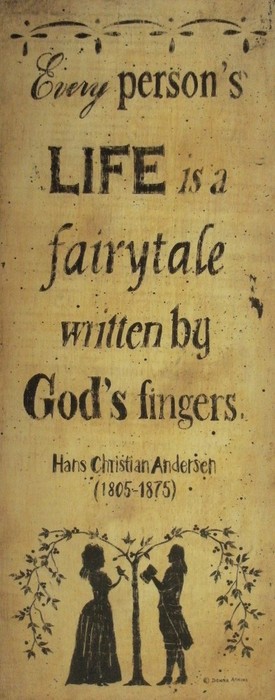

One of the morals to be taken from the Grimm's tale is the knowledge that having faith in God will help you overcome evil. The children are essential in the implementation of this theme. However in the MGM film, the father is the only character vocalizing the need to trust God during their time of hardship. Fairy tales are written in such a way for children to accept the social structures of the time (Zeitgeist), which Rüdiger Steinlein refers to as "domestication of the imagination." This element of the story is eliminated in the film, due to the fact that Hansel and Gretel are not exemplifying that their own "goodness" and Christian faith is what overcomes the witch.

http://41.media.tumblr.com/tumblr_lutmwzSTPi1r6embzo1_500.jpg


Many people argue that the tale of Hansel & Gretel is exhibited as a coming of age story. The children must learn to fend for themselves, grow up, and use their brains to get out of harms way (without the help of their parents). The pinnacle scene on which this theme lays is when Gretel uses her quick wit to con the witch and push her into the burning oven.

The MGM film uses charm and magic instead of the children's cunning to kill the witch. Although Hansel still uses the chicken bone to trick the witch into prolonging the time before she eats him, but Gretel's power is ultimately usurped. Instead of using her own intelligence, Gretel grabs the witch's staff and performs her own spell in order to kill her.

http://i.ytimg.com/vi/efyLnijCvEI/hqdefault.jpg

There are other small variations such as: the children only going out to the forest once, the witch's house being made of gingerbread, the father searching for the kids, Hansel and Gretel not taking jewels from the witch's house, and the addition of other children being saved.

The film does follow the original plot closely (though scenes were added to lengthen the story). But I would argue that the archetypes that make this fairy tale a classic were ignored.

The directors edited the tale in order to maximize their audience. By creating a family friendly movie, filled with songs and light-hearted attitudes, viewers are able to overlook the dark, underlying themes and simply enjoy a good story.

Zipes, Jack. "The Rationalization of Abandonment and Abuse in Fairy Tales: 
     The Case of Hansel and Gretel." Happily Ever After: Fairy Tales, Children, 
     and the Cultural Industry. New York and London: Routledge, 1997. 39-60. 
     Print.

Thursday, September 3, 2015

The Nature of Fairy Tales

We've all heard the term fairy-tale (auf Deutsch, Märchen), but do we really know what it means? What is the significance? And how can we distinguish fairytales from other stories?

As a starting point let me just say that at the heart of every fairy-tale there are 2 things:

1. The plot
2. Magic

                             http://www.coroflot.com/lauraadkins/The-National-Exchange-Club

But before we can understand what a fairy-tale is we need to know what a fairy-tale isn't... 

Myths
Myths do not have magic. Sure there are supernatural elements, but those involve the power of the gods, not magic. Myths are also believed to be true.  The myths of ancient Greek and Roman gods are mystifying to their followers and instill the ideology of gods holding immense power over mankind. 


http://www.talesbeyondbelief.com/images/gods-33.jpg

Legends
The word legend comes from the Latin legenda, meaning "that which is to be read." This is in contrast to fairy-tales which were passed on as an oral tradition. Legends also deal with ordinary people who eventually experience some sort of extraordinary event. 

Now there are a few types of legends, including local and saint legends.

Saint legends aren't quite as specific on the setting of their stories. This is due to the fact that their purpose is to reaffirm people's faith in Christianity. This can be compared to the purpose of a myth, however these legends deal with ordinary people instead of gods. 


http://www.wallideas.net/wp-content/uploads/2015/05/Enchanted-Forest-Picture-Wallpaper-xf4tn-Free.jpeg

Local legends (of course) deal with locality; naming a specific town or city, as well as a time or year of occurrence.


The concept of time, however, does not exist in fairy-tales. Tales often begin with the phrase, "Once upon a time" or "Es war einmal." This saying does not indicate a time (or year) in which the event occurred. An example of fairy-tale's ignorance of the rationality of time is present in the story of "The Brier Rose" or "Sleeping Beauty." It is said that the princess is asleep in a tower for 100 years, yet she possesses the same amount of youth and beauty when she awakens.


http://img1.wikia.nocookie.net/__cb20120411014354/disney/images/c/c0/PrincessAuroraSleeps.jpg

The magic in fairy-tales is seen as a normal occurrence (talking animals, curses and spells), but is used solely to move the story along its course. Fairy-tales do not have eloquent descriptions. The actions of the characters are used to describe the story. As listeners/readers we are to use our imaginations to picture the actions taking place.

http://cdn.meme.am/instances/60687127.jpg

Lüthi, Max. "The Dragon Slayer: The Style of the Fairy Tale." Once upon a Time: 
     On the Nature of Fairy Tales. Bloomington: Indiana University, 1976. 47-57. 
     Print. 

Monday, August 24, 2015

Introduction

I chose the FYS, From Grimm to Disney, because I am fascinated by German history and culture. As Jack Zipes explains in his book, The Brothers Grimm, the uncovering of Naturpoesie can bring enlightenment to the "natural essence" of ancient Germanic culture and literature. Naturpoesie focuses on das Ganze or das Volk, as it was spoken and passed down by and for the people.

http://www.blurb.com/images/uploads/catalog/09/2847509/2731046-d14824347f5597bd5fc6e9efe5224469.jpg

I have always loved Disney movies (as most children do). The sense of whimsy and optimism paired with catchy music makes for quite the trifecta. Unfortunately (or fortunately), many people do not know the true stories behind all the amazement Disney provides.

https://blogger.googleusercontent.com/img/b/R29vZ2xl/AVvXsEhPRe0OQCDsc_PyTpkYvDhmbSFhobfyOd9dNuRfdkKcTR72Ij4ro_BC0HiqeoSv-ncraK-eunysBnCF4rDpOQZhK237RmNB4q26pDZlzexdnl_lNiPMfUGaxpUV0W-l24LjPeffHJ302Hsk/s1600/disney_52_films_desktop_by_classicalguy-d6anuq4.png


This semester I hope to gain a better understanding of the Grimm's fairy tales, regarding their underlying themes and reflection of German culture. Many selections of literature offer subtle, controversial interpretations. Additionally, I would like to delve into the adaptations instituted by Disney to create a child friendly fairy tale. When one discovers the true intention or story behind the quaint Disney films, it can be quite a shock.

As a German student I have had the pleasure (I use the term pleasure lightly) of reading some excerpts from Struwwelpeter. As far as expectations for the content of the Grimm's fairy tales goes, I assume they will fall along the same gothic lines.

https://upload.wikimedia.org/wikipedia/commons/6/6f/H_Hoffmann_Struwwel_03.jpg


My favorite fairy tale is Little Red Riding Hood, because it was the first fairy tale I had ever been told. However, I was told this story as a child and therefore it was censored (to a certain extent). I'm not entirely sure which events correspond to the original version, if I'm being completely honest. I suppose it's a good thing I'm taking this class then.

https://s-media-cache-ak0.pinimg.com/236x/60/58/12/60581260407303dcd8fe651205c0c4bf.jpg


Zipes, Jack. "The Origin and Reception of the Tales." The Brothers Grimm: From 
     Enchanted Forests to the Modern World. New York: Palgrave Macmillan, 2002. 
     25-64. Print.